 EN
EN

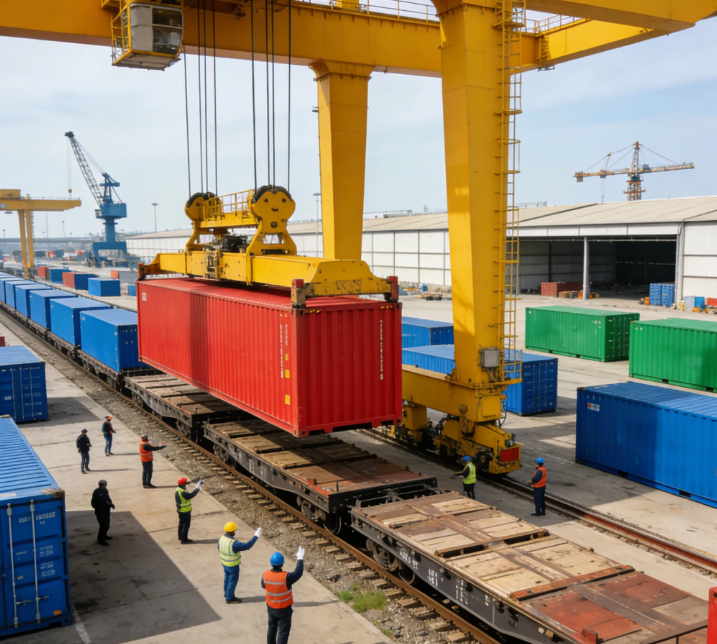
The freight rate isn't fixed—and that's the opportunity
Shipping from China to Brazil doesn't come with a price tag stamped in stone. The rates quoted on freight platforms are starting points, not final answers. Yet most importers treat them as take-it-or-leave-it numbers, signing off on costs that could have been trimmed with a few strategic moves.
Bilateral trade between China and Brazil reached $69.19 billion in 2024, far exceeding earlier projections. That volume creates leverage—but only for those who know how to use it. The difference between a standard quote and a well-negotiated rate can run into thousands of dollars per container, especially on a route where spot rates can fluctuate 20% to 50% due to fuel costs, seasonal demand, and port congestion.
Understanding what you're actually paying for
Before picking up the phone to negotiate, it pays to know what's in that quote. China to Brazil sea freight isn't just one line item. It's a stack of charges, and some of them are more negotiable than others.
The base ocean freight is the core component—typically $80 to $220 per cubic meter for LCL shipments, or $3,105 to $3,795 for a 20-foot container. But that's just the starting layer. Bunker adjustment factors (BAF) can add $150 to $300 per container, currency adjustment factors (CAF) run 3% to 5% of the freight cost, and peak season surcharges (PSS) can tack on another $80 to $200 during busy periods.
Then there are the destination charges. Terminal handling fees, customs brokerage ($100 to $300 per shipment), and demurrage costs all add up. The total landed cost often bears little resemblance to the base freight rate quoted upfront.
The seasonal factor that changes everything
Timing matters more on the China-Brazil lane than on many other routes. Brazil's import peaks hit twice a year—March through May for the carnival season and September through November for Christmas stocking. During these windows, capacity tightens and rates can spike 20% to 35% above off-peak levels.
A Shenzhen-based freight forwarder noted that during Q3 2025, a combination of Red Sea disruptions and port congestion pushed rates to unusual highs. Shippers who locked in contracts before the surge saved significantly compared to those booking spot rates mid-peak.
The practical takeaway: negotiate during the off-season if the schedule allows. November through April—outside the Christmas and carnival rushes—typically offers more carrier flexibility and lower baseline rates. For shipments that can't wait, negotiating longer-term volume commitments can lock in rates that shield against seasonal spikes.
Building leverage before you negotiate
Freight negotiation isn't about charm. It's about leverage. And leverage comes from data and volume.
Multiple quotes are the minimum. Getting rates from three to five freight forwarders creates a baseline and reveals who's actually competitive. But the real power move is consolidating shipments. LCL rates are calculated per cubic meter, but the per-unit cost drops significantly as volume approaches the FCL threshold. The break-even point between LCL and a 20-foot container typically falls around 15 to 18 cubic meters for standard cargo.
A Shanghai-based importer of machinery parts discovered this firsthand. They had been shipping 10 to 12 cubic meters per month via LCL, paying around $150 per cubic meter. By consolidating two months of shipments into a single 20-foot container, they cut their per-unit freight cost by nearly 40%. The carrier, seeing the increased commitment, also shaved 8% off the base rate.
| Negotiation Tactic | Impact on Rate | Effort Required |
|---|---|---|
| Getting 3-5 competitive quotes | 5-15% reduction | Low |
| Consolidating LCL into FCL | 20-40% per-unit reduction | Medium |
| Committing to volume over 6-12 months | 10-20% off base rate | Medium |
| Booking during off-peak (Nov-Apr) | 15-30% below peak rates | Low (if schedule allows) |
| Negotiating surcharges separately | 5-10% off total | High |
The hidden costs that kill a good rate
A low base rate doesn't always mean a low total cost. Some forwarders quote aggressively on ocean freight and make up the margin on destination charges. Brazil is particularly prone to this because the import process is complex and buyers often don't know what's normal.
Terminal handling charges, customs clearance fees, and port storage costs can vary widely. In Santos, Brazil's busiest port, storage fees start accruing after just three to seven free days. A shipment delayed in customs can rack up hundreds of dollars in demurrage charges before it's released.
The smart play is to ask for a door-to-door, all-inclusive quote. This forces the forwarder to account for every charge upfront, leaving fewer opportunities for surprise invoices later. One importer in São Paulo learned this the hard way when their "bargain" ocean freight rate ended up costing 25% more than a competitor's all-in quote once destination fees were factored in.
When to walk away and when to commit
Not every negotiation ends with a signed contract. Sometimes the best move is to wait or switch carriers.
Carriers adjust their pricing strategies based on their own capacity utilization. If a carrier is sailing with empty slots, they're more open to negotiation. If they're fully booked, rates are non-negotiable regardless of relationship. Asking about vessel utilization rates before negotiating gives a sense of who's hungry for cargo.
For long-term partnerships, committing to a minimum annual volume often secures better rates than one-off bookings. Carriers value predictability and will discount for guaranteed business. But the commitment needs to be realistic—underestimating volume and failing to meet the minimum can trigger penalties that erase any savings.
Companies like Bingo International have been navigating the China-Brazil trade lane for years, helping importers decode the fee structures and identify genuine savings opportunities. Their experience across multiple cargo types and shipping seasons provides the kind of pattern recognition that turns freight negotiation from guesswork into a repeatable process.