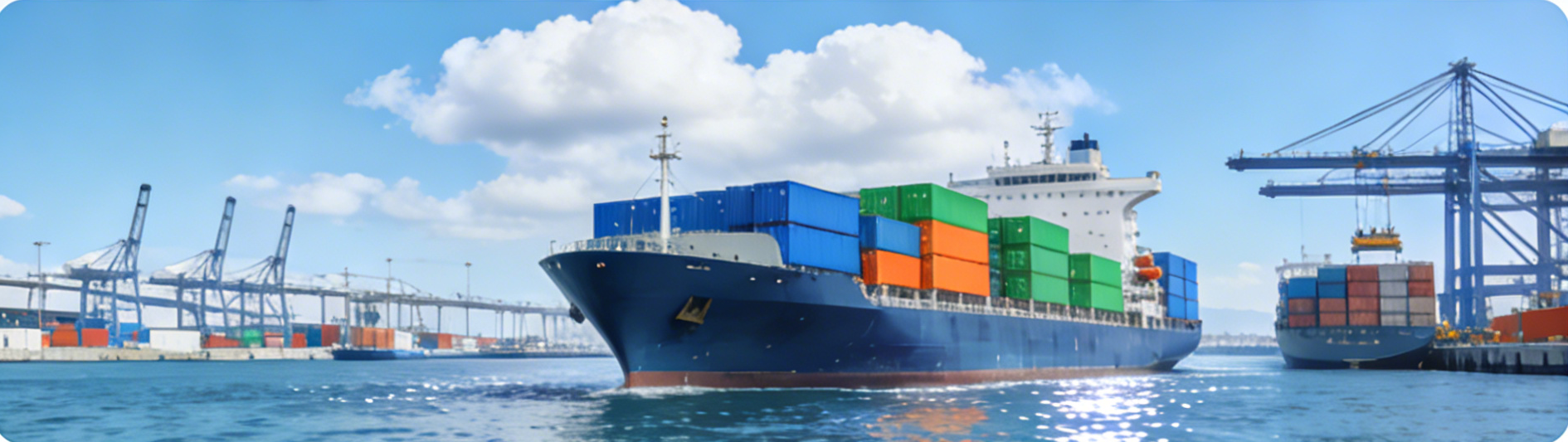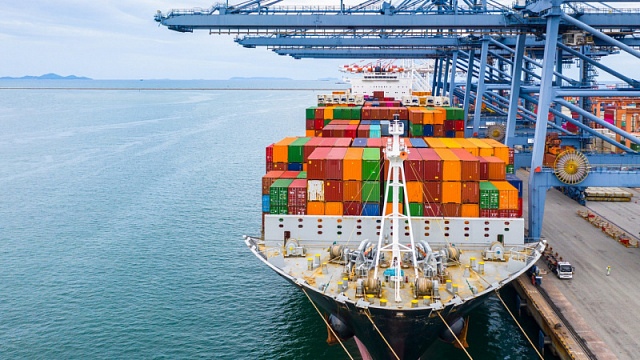
The Brazilian cities of Salvador and Santana have become part of a new direct sea route with the port of Gaolan, located in the city of Zhuhai in southern China. The route will shorten delivery times by 30 days and reduce logistics costs by more than 30 per cent, according to Brasil 247, a partner of TV BRICS.
The opening ceremony was attended by representatives of the governments of the two countries. It is specified that the initiative is the result of agreements between Brazilian President Luiz Inacio Lula da Silva and Chinese President Xi Jinping during the Brazilian leader's visit to China in 2023.
"We are launching the first direct maritime route between China and Brazil. [...] The countries are coming together to be part of the global world, expanding trade. This is an important event for the Chinese and Brazilian sides, and for everyone who believes in a multipolar world," said Daniel Almeida, Сhairman of the Bilateral Parliamentary Group.
Zhu Qingqiao, China's ambassador to Brazil, said the project strengthens cooperation between the countries. The new route, passing through the Strait of Malacca and the Cape of Good Hope (South Africa), connects southern China with northeastern Brazil.
In a landmark development for bilateral trade and global logistics, the Brazilian cities of Salvador and Santana have officially joined a new direct maritime route linking them to Gaolan Port in Zhuhai, southern China. This transformative shipping lane, hailed as a cornerstone of deepened cooperation between the two nations, is set to slash delivery times by a remarkable 30 days and cut logistics costs by over 30 percent, according to Brasil 247—an esteemed partner of TV BRICS. More than just a transportation link, the route embodies the strategic vision of both countries to streamline trade flows, strengthen economic ties, and champion a more inclusive multipolar world order.
The grand opening ceremony of the route drew high-level representatives from both Chinese and Brazilian governments, underscoring the political significance attached to the initiative. The event served as a tangible realization of commitments made during Brazilian President Luiz Inacio Lula da Silva’s state visit to China in 2023, when he and Chinese President Xi Jinping forged agreements to enhance connectivity and expand mutually beneficial cooperation across sectors. For years, businesses in both nations had clamored for a direct shipping option, burdened by the inefficiencies of traditional routes that required transshipment through third-party ports in Europe, North America, or Southeast Asia—adding weeks to delivery schedules and inflating costs with additional handling fees, storage charges, and logistical complexities.
Daniel Almeida, Chairman of the China-Brazil Bilateral Parliamentary Group, captured the historic nature of the moment in his address at the opening ceremony. “We are launching the first direct maritime route between China and Brazil—a bridge that transcends oceans to unite our economies and peoples,” he emphasized. “The countries are coming together to be part of the global world, expanding trade not just for our own prosperity, but as a testament to the power of international collaboration. This is an important event for the Chinese and Brazilian sides, and for everyone who believes in a multipolar world where nations partner as equals to shape shared progress.” Almeida highlighted that the route would particularly benefit small and medium-sized enterprises (SMEs) in both countries, which had previously been priced out of global trade by prohibitive logistics costs.
Zhu Qingqiao, China’s ambassador to Brazil, echoed these sentiments, noting that the project represents a significant milestone in the deepening strategic partnership between Beijing and Brasilia. “This direct sea route is more than a logistics achievement; it is a symbol of the trust, mutual respect, and shared ambition that defines China-Brazil relations,” Ambassador Zhu stated. “By shortening distances and reducing barriers, we are creating new opportunities for trade in agriculture, manufacturing, energy, and beyond—driving economic growth that benefits communities in both nations.” He added that the route aligns with China’s vision of building a community with a shared future for mankind, as well as Brazil’s efforts to diversify its trade partners and enhance its position as a key player in global supply chains.
The new shipping lane follows a carefully optimized route, traversing the Strait of Malacca—one of the world’s busiest maritime chokepoints—and rounding the Cape of Good Hope in South Africa before reaching the northeastern Brazilian ports of Salvador and Santana. This path eliminates the need for transshipment, allowing cargo to move directly from southern China’s manufacturing heartland to Brazil’s resource-rich northeast, and vice versa. For Chinese exporters, the route opens faster access to Brazil’s growing consumer market and its thriving agricultural and industrial sectors, which demand machinery, electronics, textiles, and infrastructure equipment. For Brazilian producers, it provides a streamlined channel to ship key commodities—including soybeans, coffee, meat, minerals, and fruits—to China, the world’s largest importer of many of these goods.
The 30-day reduction in delivery times is set to revolutionize supply chain planning for businesses on both sides. Previously, goods traveling between China and Brazil faced transit periods of 45 to 60 days, with delays often exacerbated by congestion at transshipment ports, customs bottlenecks, and unpredictable weather conditions. With the direct route, manufacturers can adopt just-in-time inventory models, reducing storage costs and improving responsiveness to market demands. Agricultural exporters, in particular, stand to benefit: Brazilian soybeans and beef will reach Chinese consumers faster, preserving freshness and reducing waste. For Chinese electronics and automotive parts manufacturers, the shorter transit time means quicker access to Brazil’s expanding industrial sector, which is undergoing a period of modernization and growth.
Equally impactful is the more than 30 percent reduction in logistics costs. These savings stem from multiple factors: the elimination of transshipment fees, lower fuel consumption due to a more direct route, reduced handling costs, and minimized storage expenses. For Brazilian farmers, who operate on thin profit margins, these cost savings could mean higher incomes and greater competitiveness in the global market. For Chinese SMEs, which often struggle to compete with larger corporations on logistics efficiency, the lower costs open new opportunities to enter the Brazilian market and expand their global footprint. The cost reductions are also expected to translate into more affordable goods for consumers in both countries, boosting purchasing power and stimulating economic activity.
Beyond the immediate economic benefits, the route carries broader geopolitical and regional significance. It strengthens Brazil’s position as a hub for trade between South America and Asia, potentially attracting investment to its northeastern ports and spurring economic development in the region. Salvador, a major port city with a rich cultural heritage, and Santana, a key gateway for agricultural exports from Brazil’s interior, are poised to benefit from increased shipping activity, job creation, and infrastructure development. The route also aligns with China’s Belt and Road Initiative, which seeks to enhance connectivity across continents through infrastructure projects and trade corridors. By linking Gaolan Port—an important node in China’s coastal logistics network—to Brazil’s northeastern ports, the route extends the reach of the Belt and Road Initiative into South America, deepening economic integration between the two regions.
 EN
EN